
Scientific Memorandum of Understanding Signed Between University of Halabja and Germany’s HTW Berlin
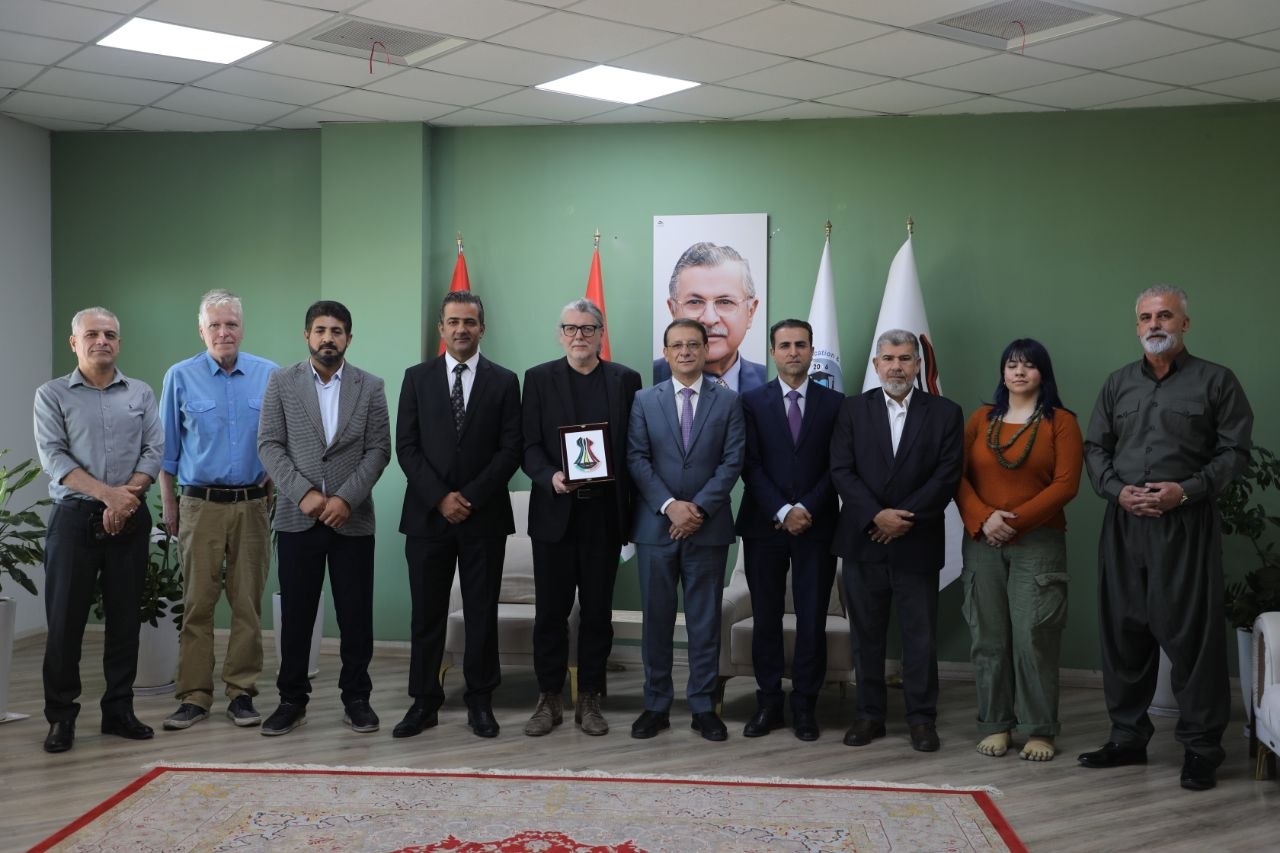
As part of Halabja University’s ongoing efforts to establish and expand academic partnerships, Prof. Dr. Bamo Parwezkhan, President of Halabja University, received Prof. Horst, representative of HTW Berlin University of Applied Sciences (Germany), Mr. Martin from the German WADI organization, and the head of the NWE Organization on Wednesday, September 9, 2026.
During the meeting—attended by Asst. Prof. Dr. Halgurd Ali (Vice President for Scientific Affairs) and Dr. Fraydoon Wali Ahmed (Department of Electrical and Electronic Engineering)—the University President welcomed the delegation and highlighted the continuous efforts of the university's council, faculty, and staff toward achieving academic milestones. He emphasized the strategic value of building academic ties with HTW Berlin, a globally recognized institution. The visiting delegation expressed enthusiasm for the partnership, agreeing on the practical implementation of the agreement terms. The MoU was officially signed by the President of Halabja University, following its prior endorsement by HTW Berlin’s leadership.
The agreement was spearheaded by Dr. Fraydoon Wali Ahmed under the direct supervision and support of Asst. Prof. Dr. Halgurd Ali, following six months of joint meetings, discussions, and project proposals submitted to the German university.
Key Strategic Areas of Cooperation:
- Renewable Energy: Joint scientific projects focusing on solar photovoltaics (Solar PV) and battery storage systems.
- Environmental Technology: Development of water resources and recycling technologies.
- Collaborative Research: High-level joint research initiatives between scholars from both universities.
- Academic Exchange: Programs facilitating the exchange of students and faculty members (guest lecturers).
To launch the implementation phase, Asst. Prof. Dr. Halgurd Ali and Dr. Fraydoon Wali Ahmed accompanied the delegation on a field assessment across several villages and border areas in Halabja Governorate. The trip aimed to identify local needs and select optimal sites for implementing technical projects in renewable energy and environmental sustainability.
This initiative serves as a strong foundation for launching actionable projects that benefit the residents of Halabja Governorate while enhancing Halabja University's academic standing.